Friday, January 7, 2011

Assisi III

Hands up all those who uttered an inward groan when this little gem popped up during the week. The fact that some sort of pronouncement has been made suggests that planning is actually fairly well advanced. Now for those of you who may have missed this little side show of politically correct self abnegation on the part of the Catholic Church it has become one of those 'crisis points' for traditional minded faithful. The image of a pagan deity being enthroned above a tabernacle was always going to be problematic.* Strike that! I was being a little bit too pc. Let's put it bluntly. It was unacceptable and whoever let that one through the protocol office deserved to become nuncio to Tehran toute suite in a noble tradition of curial pariahs. He can take with him a certain papally osculated book as a token of good will.

Anyhow it seems that Assisi III is upon us and I just hope the confusion of the previous multi faith pow-wow- come- pass- the- peace- pipe will not be repeated. The Catholic Church does have quite clearly stated objectives in this area; (1) Peace is generally a good thing (2) Talking to other religions and understanding them is a good thing. (3) Acting as a negotiator on the world stage is a good thing. However (1) There are times when defending oneself makes peace impossible. (2) Dialogue is fine but remember who actually has the Divine Revelation and who have, at the best fragmentary glimpses of it. (3) Remember that souls come first before bodies. No matter how much ecumenical rear kissing might seem to be polite we've gotta get those babies saved and those stomachs filled!

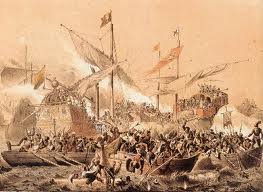
* By the way if you really want to see the apostasy of previous Assisi pow-wows you can look here. I'm not wasting space here when we can have a perfectly lovely picture of an historic inter faith dialogue at a practical level which led to peace and the relief of suffering.

Wednesday, January 5, 2011

Happy Epiphany!

Happy Feast Day! I guess I can say that without getting into too much trouble. I guess I can also admit that I'm just a little bit tired of the tinkering around with the Feasts and Holy Days of Obligation. What's the purpose? Ostensibly to make things easier for the faithful. Fine but don't do it at the expense of liturgical common sense. You see there seems to be some very unclear thinking going on. I somehow doubt that the officials that have actually gone and done this know what the grass roots opinion of it is. They must be totally deaf to the fact that whilst the majority of the faithful once suspected they were silly out of touch old fuddy duddies now they actually know it!
You can imagine the Chancery Office wanting to uphold the bishop's authority (it is the ultimate source of that nice pay cheque) and therefore Holydays of Obligation must remain. However at the same they are a bit of a nuisance- it means those nice Conference lunches and cocktail parties have to be sacrificed on the altar of fulfilling ones obligation. Then there's the 'lay-terrh-gee-kahl' brigade in the office round the corner. They are pretty ropeable over the damage it's done to their precious cycle of Ordinary Sundays. The School chaplains, if they can get through the switchboard,  will tell you that the exercise has probably halved the times any Catholic school child will go to Mass during any one year. Thankfully the Indultists have managed to  resurrect some archaic dispensation to celebrate external solemnities. I suspect the score between the Bishops' Conference and the LMS stands at 1-1 at this point.

The average lay person just shakes their head and wonders what practical difference it has made. If they could get there they got there if they had been reminded. If they couldn't they didn't.  I suspect this great 'easing' from our Lords and Masters has not radically increased the devotion of the faithful nor changed the amount of people attending Masses. So what has been gained? A little smug shifting of the deck chairs perhaps? An opportunity, perhaps,  to get revenge on those nasty Extraordinary Form types? (Bad luck guys it backfired!). Sadly the whole exercise is more likely to have been one of deluding themselves that they are actually of some practical significance.

Saturday, January 1, 2011

In the Name of Jesus let every knee bow, of those that are in heaven, on earth, and under the earth; and let every tongue confess that he Lord Jesus Christ is in the glory of God the Father. Philippians 2:10

Juliet asks of Romeo ‘What is it in a name? (II, ii, 1-2) The power of knowing somebody’s name is very real. Dale Carnegie (1888-1955), when training his army of salesmen, used to make the first lesson that of learning the customer’s name. ‘Say it three times in the first two minutes and you’ve got them’, he would say. In the Old Testament knowing somebody’s name was a very big thing indeed the major revelation of the Old Testament was not so much a great miracle of the parting of a sea but the revelation of the actual name of God. The idea was that if you had God’s actual name then you somehow had his particular attention. Of course in the Old Testament this was so powerful that it had to be covered up and pretty soon the people of Israel forgot how to say the name of God. Probably just as well. In the New Testament the revelation to us of what the Saviour’s name was very important. It’s a bit like pass the parcel. Now that we’ve got the name what are we doing with it?

You might be surprised but one of the first shocks to the system I received when moving to Britain was the mouths on the school children. To be quite honest, and coming from a country that was always, shall we say, a bit colorful in it’s language, I was shocked. Now I’m not known for the subtlest of expression but the average British School child is really capable of coloring the air a shade of blue; particularly when the sacred name of our Lord is involved. Of course one of the greatest tragedies today is that you can profane the name of Our Lord Jesus Christ in a thousand ways and not an eye will not blink. However if you dare to even mention the name of someone else less than successful of some centuries later and then you risk imprisonment. Surely it’s time to reclaim some ground here?

Of course profanity is not a new problem however it’s one that we need to be very careful of these days. We need to make sure we are protecting our own territory and we protect it first not from other’s abuse but also from own misuse. So the question for today is; Do we really honour the Holy Name of Our Lord Jesus Christ in our day to day speech. Are we careful that we honour our Lord by the respectful use of his Holy Name? Wandering the ports of maritime France in the late 18th century the Jesuit Luigi Felici (fl. 1790s) was worried by the profanities he heard coming from the sailors’s mouths. He set to write a prayer that would counteract those curses and it’s that prayer that we might use frequently as a remedy to our own failings today. It’s start’s with Blessed be God. Blessed be His Holy Name. Blessed be Jesus Christ, true God and true man. And for today; Blessed be the name of Jesus.
Thursday, December 30, 2010

On the Road

Apologies for the dearth of postings but Christmas rather got in the way. Now it's the end of the civil year and I find myself on what has become an annual missionary journey to the far flung outposts of the traddie world. Last Sunday I celebrated a private Low Mass in a discrete Chapel of a London Church with server alone in attendance. Next Sunday will be Holy Mass for the masses in a part tin construction some 300 miles north of  the nearest expresso machine.

Anyhow this 'thought for the day' came to me on board a plane. Economy class, let me assure you, but far enough back to avoid the screaming of the 'brat pack'. I'd flown this airline before and on the surface things seemed the same- the same smiles, the same well rehearsed routine of the cabin crew- but at the same time it was quite obvious that the financial woes of the last few years were making changes at a rather fundamental level. You got the impression that this airline was doing it's best to make it appear if all was fine and 'business as usual' when there really was a more fundamental change happening underfoot.

I mean all the outer 'forms' appeared to be there but they had got a bit hollow. The menu cards, once nice bi lingual souvenirs giving zoo class some glimpse of the glories at the head of the cabin, had been replaced by on screen flash messages announcing the choices of the day. Diet Coke, by the way was off the menu far too quickly. The meals themselves were reduced in size and number and the healthy vegetarian carbon neutral option (how many buzz words was that?) must have halved the catering bill. What should have been a second meal had turned into a sandwich. The cabin crew themselves disappeared for some hours leaving the passengers to self serve at the bulk heads.

I don't think I need to spell out the parallels I was drawing in my mind. The airline still does the job even if it is only with the shell of the previous service standard. I still got from point A to point B in relative safety but it's there that the happy memories end. How long, I thought to myself, can I rely on something that is becoming gradually less 'fit for purpose'. Anyhow here I am, first stop in my travels in a rather strange land ruled over by a red shrieking banshee. Rumour has it there's a wedding brewing. I better look out my copy of Dimboola and brush up on local customs and etiquette.

Friday, December 17, 2010

Towards a theory of everything

The 'Holy Grail' of much intellectual pursuit from time immemorial has been a search for some explanation of everything. A theory, an equation, a philosophy that would give a unified explanation of why things are as they are. It's a noble ambition but will always fail because of our own human  limitations. Of course, by faith, I know that the answer must just be God and, personally, I'm quite satisfied with that. Others wont be. Recently I've tried to approach this in another way. Like the 'chaos theory' physicists who examine minute segments of the cosmos in search of the key that will lead to a 'theory of everything' I've been thinking about whether there is a single answer to all the problems of today and particularly those that seem so obvious to traditional Catholics.

Is there a Ground Zero to be found? Did somebody step on some sort of sacred butterfly many years ago and cause a ripple effect through to the current days? Using this theory of course every action taken to correct the original error will cause further ripples. I know that the liturgiologists and the liturgists will all have their own theories here. The theologians will almost turn to the modernist controversies of the early Twentieth century. The philosophers will probably lay the blame at the feet of Aquinas or, if they are being particularly daring, Augustine.

Personally I think our immediate problems probably originated in the Great War and the crisis of faith and growth of general cultural skepticism that ensued.  Of course by faith, and some experience, I know that there is a real entity who works day and night across the generations to stop any unity of thought or practice. Starting with an seemingly innocent question in the Garden of Eden his greatest achievement to date has been to make many Church leaders think and teach that such a unity of thought is undesirable. That unchecked or unchallenged dissidence is a good thing in itself. Of course in the details this seems insignificant but in the bigger picture it has led to a free for all.

Saturday, December 11, 2010

Protest

I've been thinking about the disturbances of the last few days, well those that have been close to home at least. At the forefront has been a new wave of student demonstrations on the streets of London. Student Fees are the issue at hand. For those of you 'over the pond' this may seem to be rather a strange thing to protest about. In Britain it's a slightly more complex issue. You see one of the fundamental aspirations for the last century or so has been to provide the opportunity for all levels of education free of charge to all who qualify academically. Financial means, in theory, was to have no place in either gaining or maintaining your place at University. Because of this Britain gained it's first fee paying 'private' university in relatively recent times.

Well now the bubble has burst but I'm not convinced by the outrage on the streets. It just seems a bit stage managed and, being suspicious,  I wonder what the government is trying to hide by playing up the issue of the violence rather than addressing the very rickety path they are walking in getting the fees legislation through. Now personally I can live without a 'University for All' policy. In the rush to try and get the enrollment statistics up over the years, and thus being able to crow about a more educated equal opportunity society, the 'powers that be' have ruined many fine further training institutions by forcing them to adopt the ways and means of research institutions. A friend once quipped, spying a new child's sand pit, that if we were not careful during our 'health and safety' check, the government would reclassify it as the Silicon Research Faculty of the University of Wherever.

Is there, however, a real social justice issue here? I have no doubt it will weasel it's way into the intercessions of many parishes this weekend. Is the real question being overshadowed by a bunch of retro set young brigands who are desperately to do one better on their grandparents of 1968? Is the question of appropriate education for all really being sacrificed for the sake of some feel good statistics?

Thursday, December 2, 2010

Seminaries

Pastor in Valle over at Valle Adurni has run with an interesting posting on the history and future of English Seminaries. I can say 'English' seminaries as these are they that remain in the British Isles. One of these is scheduled to close in the next year and now the good father notes that the question of having a single national seminary is being discussed again. At what level these discussions are taking place is not clear and I suspect that such discussions having become publicly known is not an accident, but rather a 'testing of popular opinion', before any embarrassment can be suffered. It's one of those tools that PR firms use, indeed governments seems to use, to avoid any 'awkward' confrontation. If the scream is not too loud then they know they can proceed without threatening their popularity ratings.

It is sad to see historic institutions under threat however the training of clergy is very important and what is the best for the formation of faithful pastors should be the litmus test. Historically seminary education has been pretty much the norm for the last couple of centuries, that is but a fraction of the history of the Church. Other 'models' of priestly formation have existed across that history which might be better 'fit for purpose' in the current situation. In some places an 'apprenticeship' system has operated whereby the academic side of things is dealt with by sourcing from existing institutions with the pastoral side of things being dealt with in the presbytery that the seminarian lives in. Most important is a close relationship with the bishop concerned. Those models that have really flourished in recent years have been where the bishoip has taken an active role in the formation of his clergy. On an academic level that may not work where the educational standard of the bishops themselves is a problem but on the pastoral spiritual level it has some merit drawing the seminarian in the reality of pastoral situations. on a day to day basis. at the same time as giving bishops a clearer insight into where the Church's pastors of the future are heading. Mmm...I can see why they would favour the current system.